

How to Prevent Septic Tank Overflow
Content:
A septic tank overflow is one of the most stressful, unpleasant, and disruptive problems a homeowner can face. Beyond the mess itself, it can bring unwanted odors, potential health risks, and costly cleanup. The good news is that overflow is largely preventable with a few consistent habits and a bit of planning.
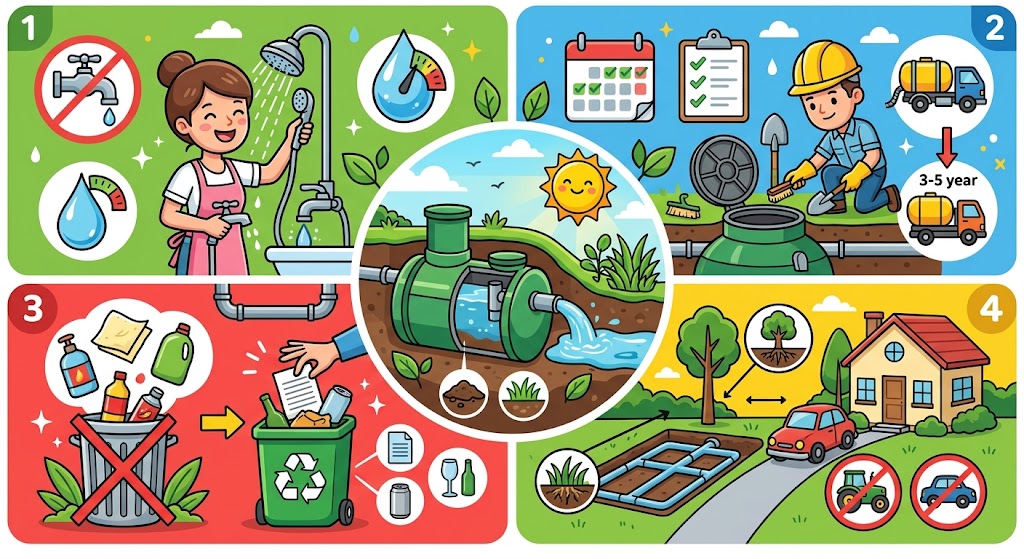
Schedule Regular Cleanings
The single most effective way to prevent overflow is sticking to a consistent cleaning schedule, typically every two to three years depending on your household size and water usage. Skipping cleanings is by far the leading cause of overflow situations, and staying on schedule removes most of the risk entirely.
Watch What You Flush
Avoid flushing wipes, sanitary products, diapers, cotton swabs, paper towels, or other non-biodegradable items, even if packaging claims they're flushable. These items don't break down the way toilet paper does, and they quickly fill up valuable tank capacity, leading to more frequent overflows.
Limit Grease and Oil Down the Drain
Cooking grease and oil might seem harmless when poured down the sink, but they solidify inside pipes and tanks over time, contributing to clogs and reducing your system's overall efficiency. It's better to let grease cool and dispose of it in the trash instead.
Be Mindful of Water Usage
Spreading out laundry loads and heavy water use throughout the week, rather than doing everything in a single day, gives your septic system enough time to properly process wastewater instead of being overwhelmed all at once.
Avoid Harsh Chemicals
Excessive use of bleach and chemical drain cleaners can kill the beneficial bacteria that your septic tank relies on to naturally break down waste. Without these bacteria, waste accumulates faster and the tank becomes less efficient over time.
Keep the Drain Field Clear
Avoid parking vehicles, building structures, or planting trees with invasive root systems near your drain field, as these can compress the soil or physically damage pipes, reducing drainage efficiency and increasing overflow risk.
Know the Warning Signs
Slow drains, persistent odors, or gurgling pipe sounds are early warning signs that something needs attention. Acting on these signs quickly, rather than waiting, is one of the best ways to avoid a full overflow situation.
Stay Ahead of Problems
Kumari Sarsafai Sewa helps Kathmandu households set up preventive cleaning schedules tailored to their actual usage, so overflow never becomes an emergency in the first place.
Call us: 9847927978
Email: kebalroben@gmail.com