

5 Warning Signs Your Septic System Is Failing
Understanding Septic System Failure
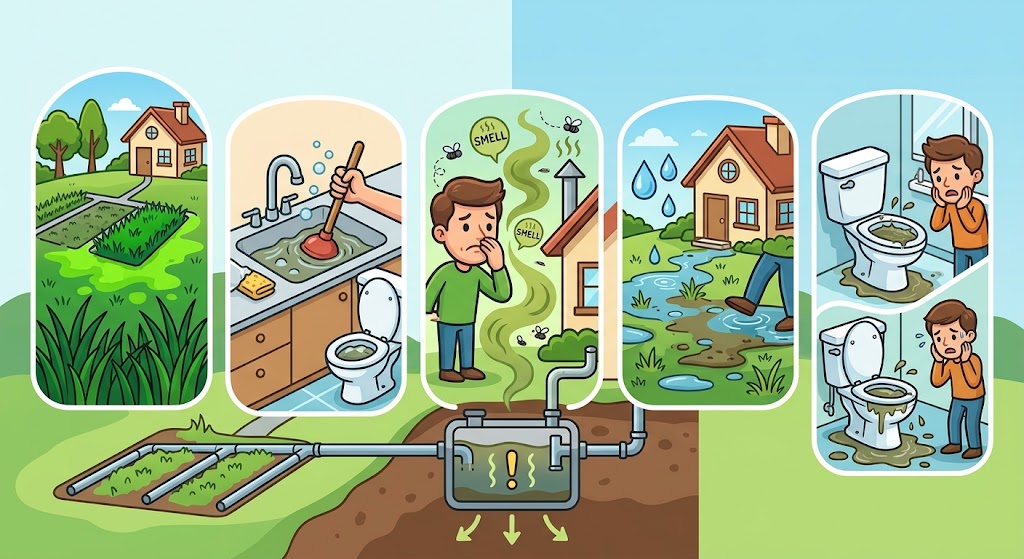
A septic system rarely fails without warning. Most homeowners notice small, easy-to-ignore signs weeks or even months before a full breakdown occurs. Catching these signs early can save you thousands in repair costs and prevent serious health and environmental hazards.
Slow or Gurgling Drains
One of the earliest signs of trouble is drains that empty slowly or make gurgling noises. This usually means wastewater isn't flowing out to the tank properly, often because the tank is full or a pipe is partially blocked.
Unpleasant Odors Around the Property
A properly functioning septic system should not produce noticeable odors. If you smell sewage near the tank, the drain field, or inside the home, it's a strong indicator that waste is not being processed or contained correctly.
Standing Water or Lush Patches in the Yard
Puddles of water near the septic tank or drain field, especially after dry weather, often point to a leak or overflow. Similarly, an unusually green or fast-growing patch of grass above the drain field can mean nutrient-rich wastewater is surfacing instead of draining underground as it should.
Sewage Backup Inside the Home
The most serious warning sign is sewage backing up into sinks, toilets, or tubs. This typically means the tank is at capacity or there's a blockage in the system, and it requires immediate professional attention to avoid contamination and property damage.
Rising Water Table or Nearby Well Contamination
If you rely on a well for drinking water, a failing septic system can allow bacteria and contaminants to seep into groundwater. Any change in your water's smell, taste, or clarity should be checked immediately alongside your septic system.
Acting early on these signs, and scheduling regular inspections, is far less costly than dealing with a full system failure. If you're noticing any of these symptoms, reach out to our team for an inspection before the problem escalates.
More Septic Care Tips
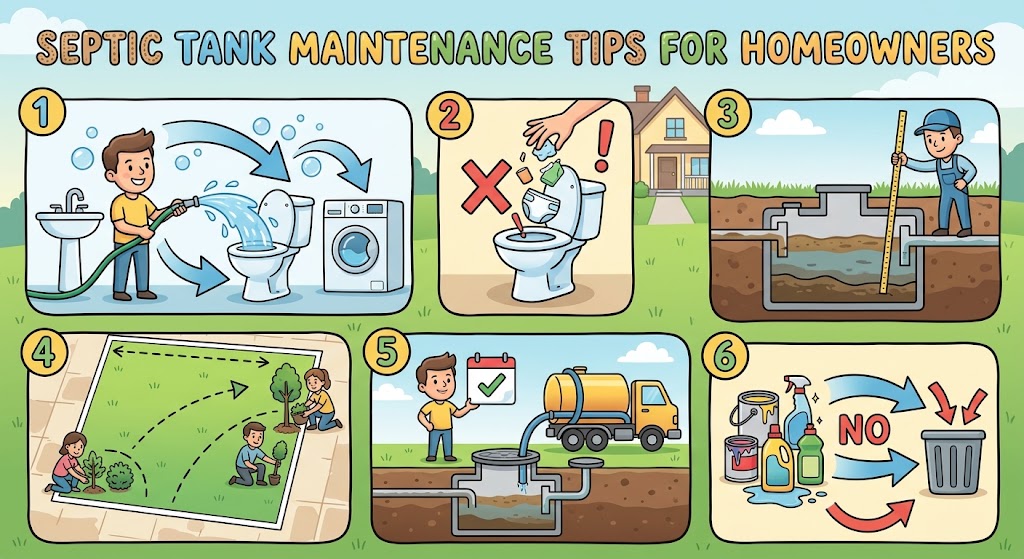
Septic Tank Maintenance Tips Every Homeowner Should Know
Simple daily habits can extend the life of your septic system and prevent expensive repairs. Here's what every homeowner should be doing.

How Often Should You Pump Your Septic Tank
The right septic pumping schedule depends on your household size, tank capacity, and water usage. Here's how to figure out what's right for you.
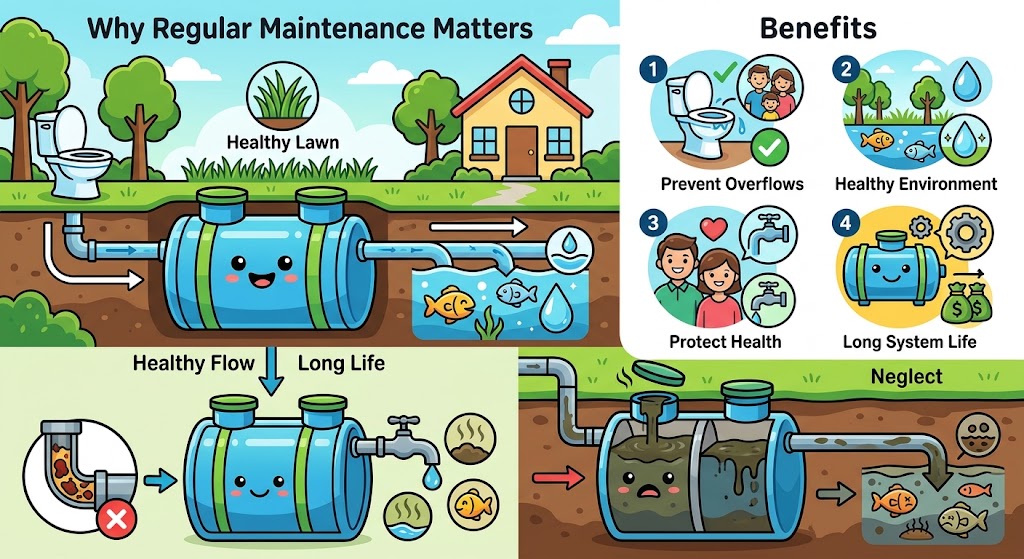
Septic Tank Cleaning: Why Regular Maintenance Matters
Learn why regular septic tank cleaning prevents costly backups and health hazards, how often it should be done, and when to call a professional service.